Our Founder
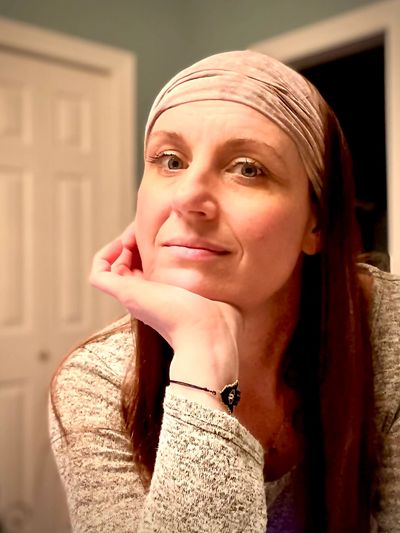
The Compassion Collective was founded by Sher Griffin, a late-discovered neurodivergent thinker, researcher, facilitator, and community builder whose work emerges at the intersection of lived experience, systems thinking, and relational practice.
As a late-identified autistic and ADHD individual, Sher came to recognize that many experiences often framed as personal failure—burnout, chronic misalignment, masking, and disconnection—were not simply individual problems, but reflections of environments that were never designed for neurodivergent ways of being.
This recognition became the foundation for a broader inquiry:
What kinds of environments allow people to belong without chronic self-erasure?
While pursuing graduate study in Transformative Social Change at Saybrook University, Sher developed the Cognitive Ecology Model (CEM) as a relational framework for understanding how cognition, identity, distress, and human flourishing emerge through ongoing interaction with environments, institutions, relationships, culture, and systems.
Now continuing this work as a PhD student at Saybrook University, Sher’s research focuses on identity development in late-identified autistic adults, with particular attention to masking, relational adaptation, belonging, and ecological approaches to support and participation.
Through both academic and lived inquiry, a recurring gap became increasingly visible:
while many systems document exclusion, far fewer spaces are intentionally designed to cultivate belonging, relational safety, mutual care, and meaningful participation for neurodivergent adults outside clinical or crisis-oriented frameworks.
The Compassion Collective was created in response to that gap.
Rather than focusing on fixing individuals, TCC approaches community itself as a protective and generative ecology—one where people are supported in understanding themselves, contributing meaningfully, and participating without coercion, forced performance, or chronic masking.
The work draws from integrative and practice-based frameworks that bridge theory and lived experience, emphasizing:
- relationality
- consent
- adaptability
- systems awareness
- mutual responsibility
- ecological approaches to care and participation
These principles shape not only the ideas behind The Compassion Collective, but also how the community is structured, how decisions are made, and how care is practiced.
At its core, The Compassion Collective exists to make belonging a lived reality rather than an abstract ideal.
It is a space shaped collaboratively by the people who participate in it—rooted in dignity, mutual care, and the understanding that sustainable change happens through relationship, not isolation.